
Why Test ESD Flooring?
ESD flooring must be tested regularly to verify that it continues to provide effective electrostatic discharge protection. Testing confirms the flooring remains within the required resistance range and continues to protect sensitive electronic equipment.
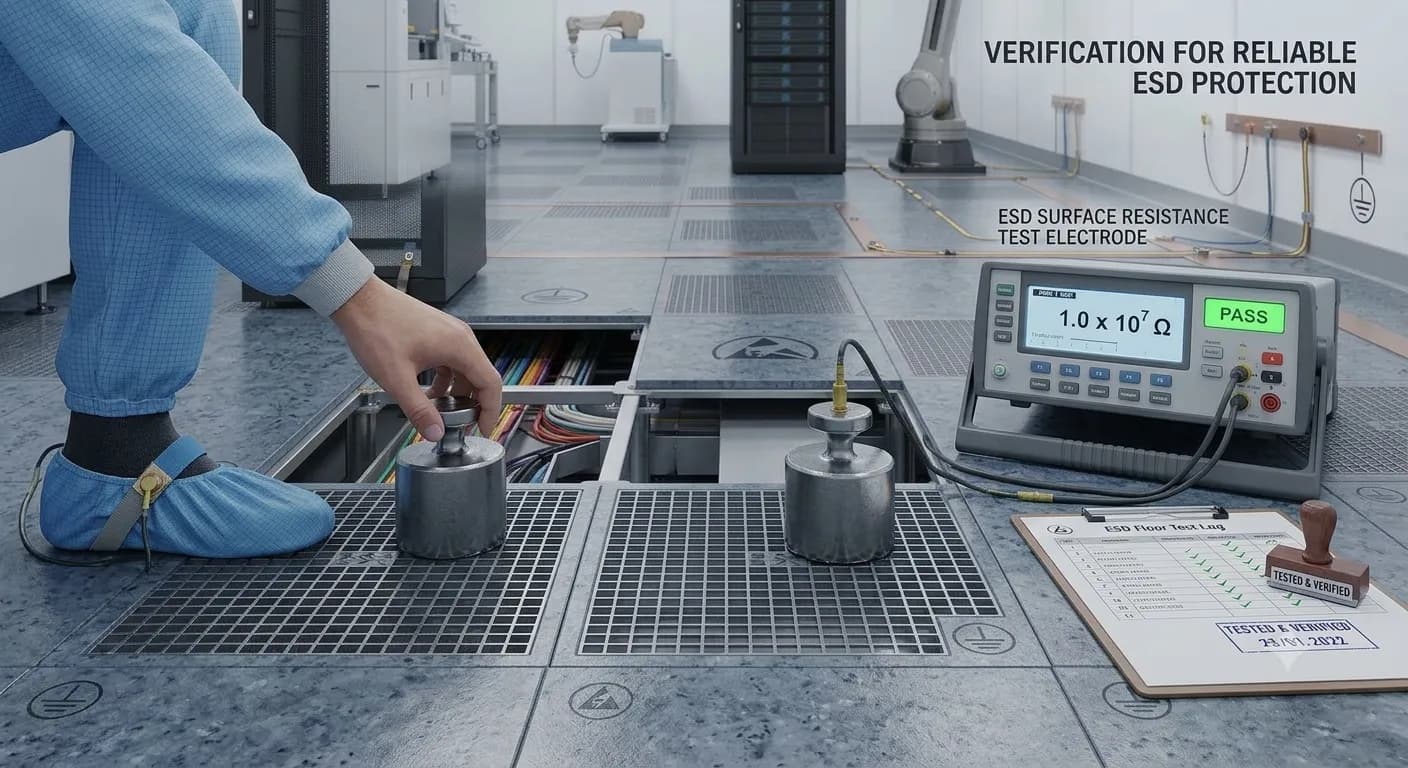
Verifies flooring performance
Confirms ESD protection
Supports compliance audits
Detects flooring deterioration
What is Electrical Resistance?
Electrical resistance measures how easily electricity flows through the flooring system. Conductive and static dissipative flooring are designed to maintain specific resistance values that safely control electrostatic discharge.
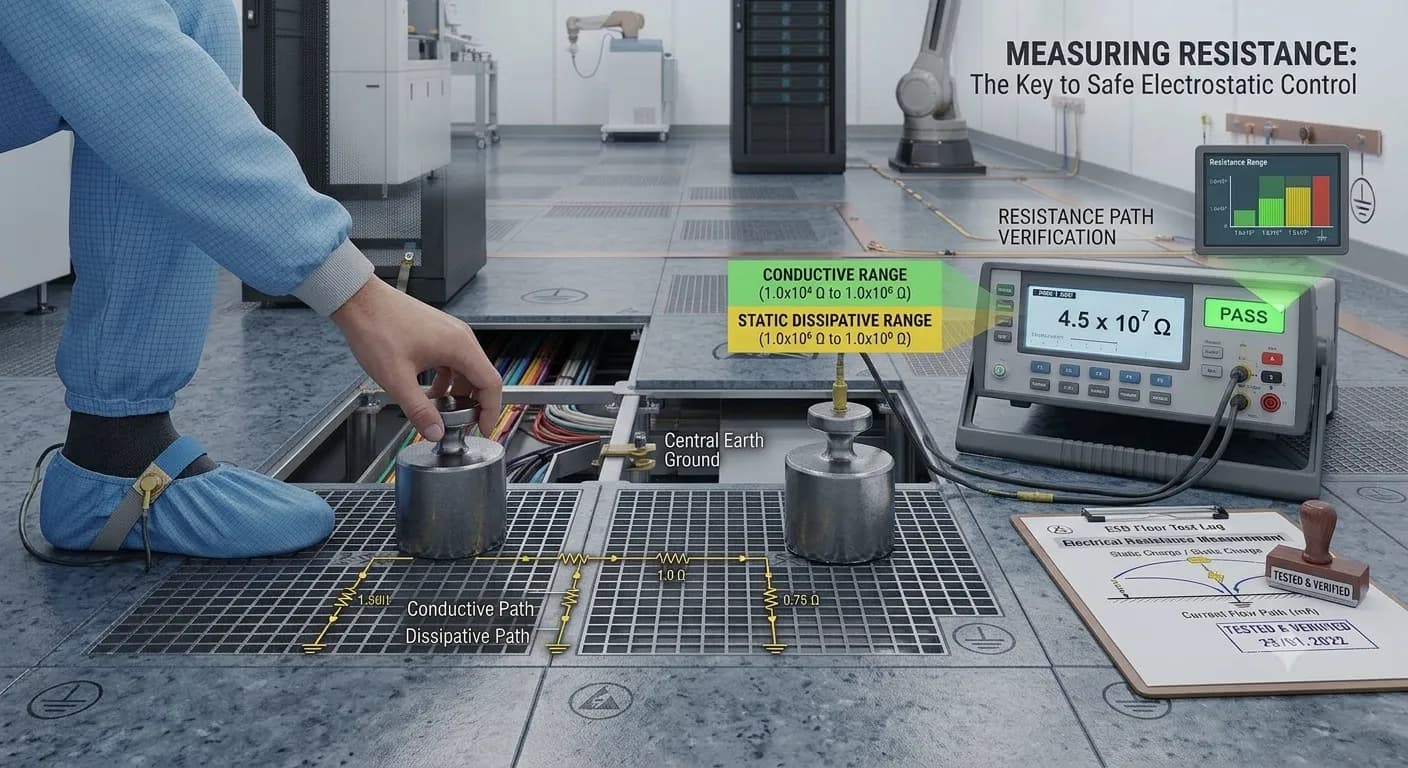
Surface Resistance
Resistance to Ground
Point-to-Point Resistance
System Resistance
Testing Equipment
Professional ESD testing uses calibrated resistance meters, conductive electrodes, grounding accessories, and standardized testing procedures to ensure accurate measurements.
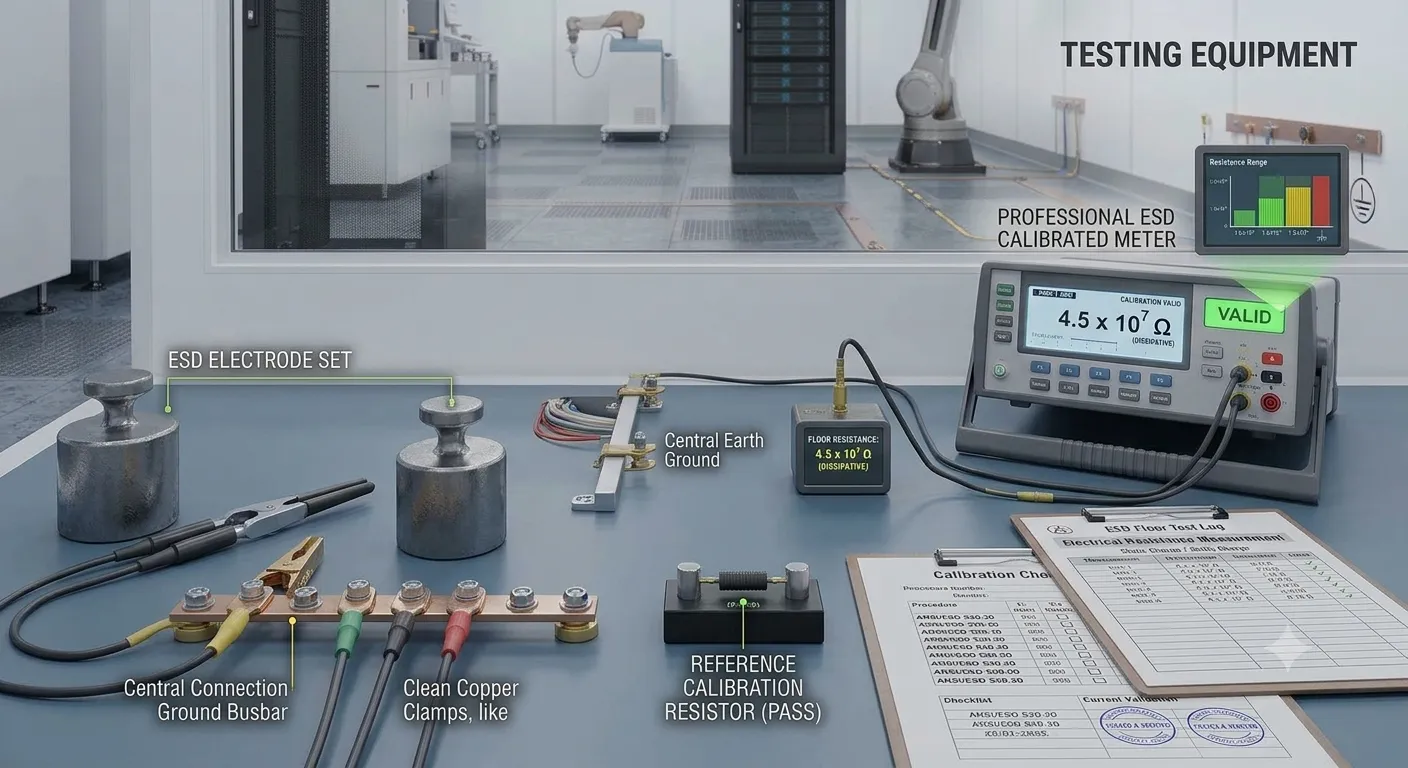
ESD Resistance Meter
5 lb Test Electrodes
Ground Reference
Calibration Certificate
Testing Procedure
Testing is performed at multiple locations across the floor using standard methods to measure resistance to ground and point-to-point resistance. Results are compared against applicable standards.
Visual inspection
Equipment calibration
Multiple measurement locations
Resistance recording
Compliance verification
Final documentation
Applicable Standards
ESD flooring testing follows internationally recognized standards that define acceptable electrical resistance values and testing procedures.
ANSI/ESD S20.20
ANSI/ESD STM7.1
IEC 61340 Series
Facility-specific specifications
How Often Should Flooring Be Tested?
Testing frequency depends on the facility, industry, traffic conditions, and quality requirements. High-risk manufacturing environments typically perform periodic testing as part of preventive maintenance programs.
After installation
During annual maintenance
After major repairs
Before compliance audits
Whenever performance is questioned
Benefits of Regular Testing
Routine testing helps maintain product quality, reduces equipment failures, improves compliance, and extends the service life of ESD flooring systems.
Improves reliability
Protects sensitive electronics
Supports certification
Prevents unexpected failures
Extends flooring lifespan
Provides documented compliance
Need Help Choosing the Right ESD Flooring?
Our flooring experts can recommend the ideal ESD flooring system for your industry, cleanroom, laboratory, electronics manufacturing facility, or warehouse.
Contact Our Experts